
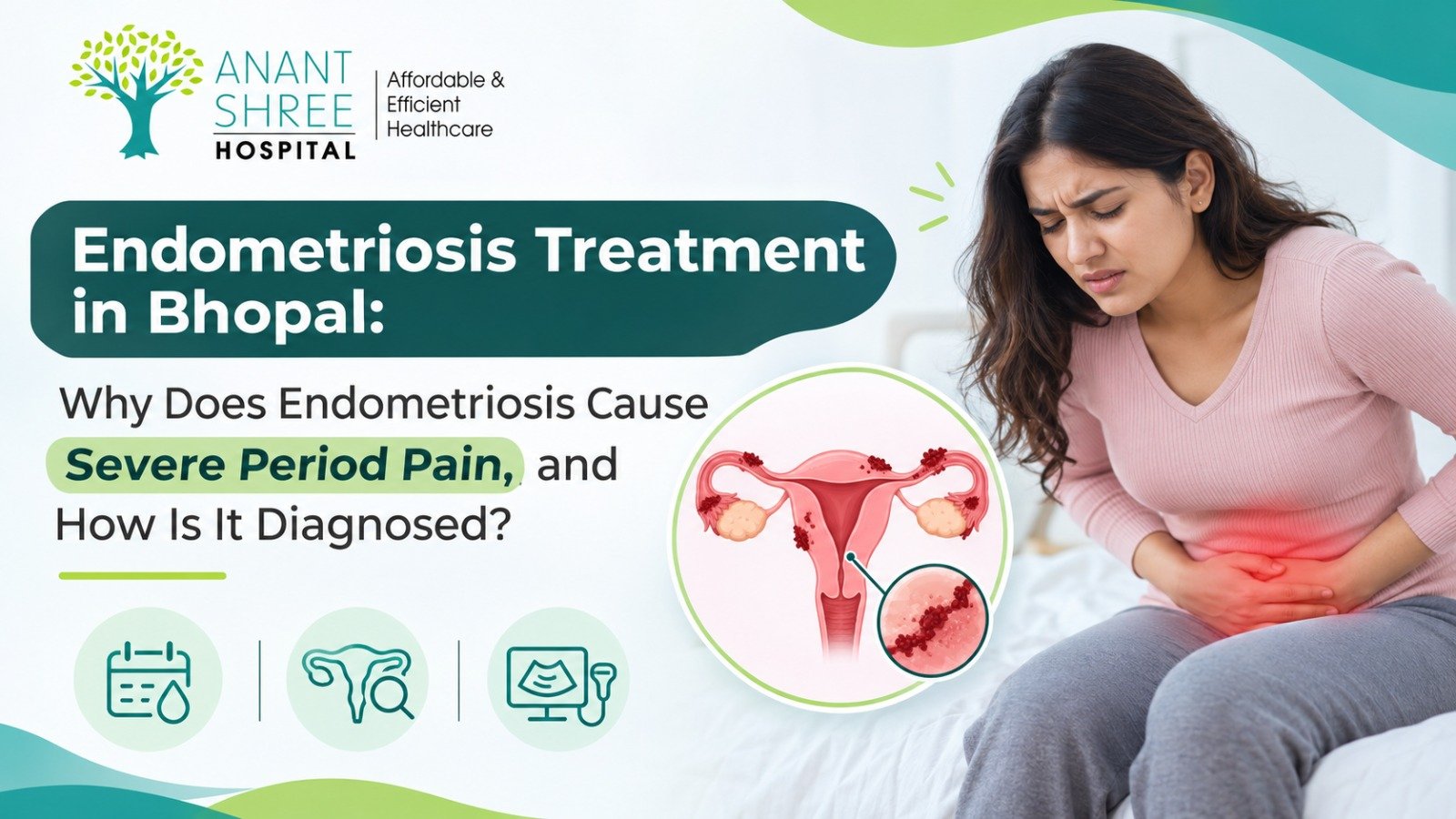
Severe period pain can affect a woman’s ability to work, study, sleep, and complete everyday activities. While mild cramps are common during menstruation, repeated or intense pain should not be ignored. One possible cause is endometriosis, a condition in which tissue similar to the lining of the uterus grows outside it. Endometriosis may affect the ovaries, fallopian tubes, and other areas inside the pelvis. These growths can respond to monthly hormonal changes and may cause inflammation, irritation, and pain. Some women experience discomfort only during periods, while others may have pelvic pain throughout the month. Understanding the symptoms and diagnosis process is important when considering Endometriosis treatment in Bhopal. A gynaecologist can review menstrual history, assess the pain pattern, and recommend investigations when needed. Women looking for a Gynecologist in Indrapuri Bhopal can discuss their concerns with Dr Divya Batra at Anant Shree Multispeciality Hospital, Indrapuri, Bhopal.
What Is Endometriosis and How Does It Affect a Woman’s Body?
The uterus has an inner lining that changes during the menstrual cycle. If pregnancy does not occur, this lining sheds and leaves the body through menstrual bleeding. In endometriosis, tissue similar to this lining grows outside the uterus. It may develop around the ovaries, fallopian tubes, or the lining of the pelvis. In some cases, it may also affect areas near the bladder or bowel. This tissue can respond to hormonal changes during the menstrual cycle. The surrounding areas may become irritated and inflamed. Over time, some women may develop scar tissue or adhesions. These are bands of tissue that can cause nearby organs or structures to stick together.
The condition does not affect every woman in the same way. Some experience severe pain, while others have mild symptoms or no noticeable discomfort. The amount of pain does not always indicate how much endometriosis is present. Understanding these changes is an important part of Endometriosis treatment in Bhopal. A medical assessment can help identify whether the symptoms may be related to endometriosis or another condition.
Why Does Endometriosis Cause Severe Period Pain?
During menstruation, the uterus contracts to help remove its inner lining. These contractions can cause cramps in the lower abdomen. In women with endometriosis, tissue outside the uterus may also react to monthly hormonal changes.
This can lead to inflammation and irritation in the pelvic area. Scar tissue may develop in some cases and affect nearby structures. These changes can contribute to pain during periods and at other times of the month.
Some possible reasons for severe pain include:
- Inflammation: Irritation around endometriosis growths can make nearby tissues painful.
- Hormonal changes: The growths may respond to the hormonal changes that occur during the menstrual cycle.
- Scar tissue: Adhesions may develop and cause nearby organs or tissues to stick together.
- Pressure on nearby structures: Growths or scar tissue may affect surrounding organs.
- Pain sensitivity: Some women may develop increased sensitivity to pain in the pelvic region.
Pain may begin before menstrual bleeding and continue during or after the period. Some women also experience discomfort between periods. When pain repeatedly affects daily activities, discussing Endometriosis treatment in Bhopal with a qualified doctor may help identify suitable next steps.
What Are the Common Symptoms of Endometriosis?
The symptoms of endometriosis can vary. Some women mainly experience painful periods, while others notice pelvic discomfort, digestive symptoms, or pain during everyday activities.
Common symptoms include:
- Severe menstrual cramps: Period pain may be stronger than usual and can interfere with daily activities.
- Pelvic pain: Discomfort may occur before, during, or after menstruation.
- Lower back pain: Pain in the pelvic area may sometimes spread towards the lower back.
- Pain during intercourse: Some women experience deep pelvic pain during or after sexual activity.
- Heavy menstrual bleeding: Some women report heavier periods or spotting between periods.
- Pain during bowel movements: Discomfort may occur while passing stool, particularly during menstruation.
- Pain during urination: Some women experience discomfort while passing urine.
- Difficulty becoming pregnant: Endometriosis may affect fertility in some women, although many women with the condition conceive naturally.
These symptoms can also occur with other health conditions. They should not be used alone to confirm endometriosis. Women looking for an Endometriosis doctor in Kalpana Nagar Bhopal should discuss their symptoms and medical history with a qualified gynaecologist.
How Is Normal Period Pain Different from Endometriosis Pain?
Mild or moderate period cramps are common. They usually occur because the uterus contracts during menstruation. In many women, the discomfort improves with rest, warmth, or suitable pain-relief medicines.
Endometriosis-related pain may be more intense or last longer. It can begin several days before the period and continue after menstrual bleeding ends. Some women also experience pain outside their menstrual cycle.
| Normal period pain | Possible endometriosis-related pain |
|---|---|
| Usually lasts for a limited time | May begin before periods and continue afterwards |
| Often improves with simple pain-relief measures | May continue despite usual pain-relief measures |
| Usually does not disturb daily activities | May affect work, sleep, or everyday routines |
| Mostly occurs during menstruation | May also occur outside menstrual days |
| Commonly involves lower abdominal cramps | May include pelvic, back, or bowel-related pain |
These differences are general examples and cannot confirm a diagnosis. Fibroids, ovarian cysts, pelvic infections, and other conditions can also cause pelvic pain. Women searching for Severe period pain treatment in Ayodhya Nagar Bhopal should not assume that intense cramps are normal. A medical evaluation can help identify the possible cause and guide further care.
What Causes Endometriosis and Who Is at Risk?
The exact cause of endometriosis is not fully understood. Researchers believe that a combination of hormonal, genetic, immune system, and other biological factors may contribute to the condition.
Some possible factors include:
- Family history: Endometriosis may occur more often in women who have a close family member with the condition.
- Hormonal activity: Oestrogen plays a role in the growth of endometriosis-related tissue.
- Immune system factors: Differences in immune system activity may influence how the body responds to tissue growing outside the uterus.
- Cell changes: Certain cells may change into tissue that behaves like the uterine lining.
- Menstrual factors: Some menstrual patterns may be associated with an increased risk.
Having a possible risk factor does not mean that a woman will definitely develop endometriosis. Women without a known family history can also experience the condition. If painful periods are affecting everyday life, Endometriosis treatment in Bhopal should begin with understanding the symptoms and possible causes. Dr Divya Batra can discuss the importance of a medical assessment and explain whether further investigations may be needed.
How Is Endometriosis Diagnosed?
Diagnosing endometriosis can take time because its symptoms may resemble those of other gynaecological conditions. Doctors generally consider the patient’s medical history, symptoms, physical examination, and suitable investigations.
What Is Included in an Endometriosis Diagnosis in Piplani Bhopal?
1. Medical history
The doctor may ask when the pain begins, how long it lasts, whether it becomes worse over time, and whether it affects daily activities. Information about bleeding patterns, previous treatment, and pregnancy plans may also be useful.
2. Pelvic examination
A pelvic examination may help identify tenderness, unusual lumps, or other changes. However, a normal examination does not completely rule out endometriosis.
3. Ultrasound
An ultrasound uses sound waves to create images of organs inside the pelvis. It may help identify ovarian cysts associated with endometriosis, known as endometriomas. However, small or superficial areas of endometriosis may not be visible on an ultrasound.
4. MRI scan
Magnetic resonance imaging creates detailed pictures of internal body structures. It may be recommended when the doctor needs more information about the location or extent of suspected endometriosis.
5. Laparoscopy
Laparoscopy is a surgical procedure in which a thin camera is inserted through a small opening in the abdomen. It allows the surgeon to look inside the pelvis and identify areas that may be affected. It may also allow treatment during the same procedure in selected cases. Not every woman needs surgery to begin managing symptoms. The choice of investigation depends on the patient’s symptoms, examination findings, and medical needs. Women searching for Endometriosis diagnosis in Piplani Bhopal should understand that one test may not provide every answer. A complete assessment helps the doctor decide which investigations are appropriate. Dr Divya Batra can discuss the diagnostic process and explain the possible next steps.
When Should You Consult a Gynaecologist for Severe Period Pain?
Period pain should be assessed when it becomes difficult to manage or repeatedly affects daily life. Women should consider medical advice if they notice:
- Pain that prevents them from working, studying, or completing normal activities.
- Cramps that become stronger over several menstrual cycles.
- Pelvic pain that continues after menstruation.
- Pain during sexual activity.
- Discomfort during urination or bowel movements.
- Heavy bleeding or spotting between periods.
- Difficulty becoming pregnant along with a history of pelvic pain.
Women looking for Severe period pain treatment in Ayodhya Nagar Bhopal should remember that treatment depends on the cause of the discomfort. A gynaecologist can review symptoms and decide whether further examination or testing is needed. If pain is sudden and extremely severe, particularly when accompanied by fainting, fever, vomiting, or heavy bleeding, seek urgent medical attention. These symptoms may indicate a condition that needs prompt assessment.
What Treatment Options Are Available for Endometriosis?
There is no single treatment that is suitable for every woman. The approach depends on symptoms, the location of endometriosis, age, medical history, and pregnancy plans.
Which Options May Be Considered for Endometriosis Treatment in Bhopal?
1. Pain-relief medicines
A doctor may recommend suitable medicines to help manage cramps and pelvic discomfort. The choice depends on the patient’s health and medical history. Pain-relief medicines should be taken according to professional advice.
2. Hormonal treatment
Hormonal medicines may help manage menstrual cycles and reduce the activity of endometriosis-related tissue. Depending on the patient’s needs, a doctor may discuss hormonal contraceptives or other hormone-based options. These medicines are not suitable for everyone. Possible side effects and pregnancy plans should be discussed before starting treatment.
3. Surgical treatment
In selected cases, surgery may be considered to remove endometriosis growths or release scar tissue. The decision depends on the location of the condition, the severity of symptoms, previous treatment, and fertility goals. Surgery has possible risks, and symptoms may return in some women. The expected benefits and limitations should be discussed with the treating doctor.
4. Supportive daily habits
Regular physical activity, adequate sleep, a balanced diet, and stress management may support general well-being. These measures may help some women manage daily discomfort, but they do not remove endometriosis tissue or replace medical care. Women researching Endometriosis treatment in Bhopal should discuss their symptoms and personal goals before choosing a treatment approach. Dr Divya Batra can help explain the available options and the importance of individual assessment.
Can Endometriosis Affect Fertility and Pregnancy?
Endometriosis may affect fertility in some women, but it does not mean that every woman with the condition will have difficulty becoming pregnant. Many women with endometriosis conceive naturally. The condition may sometimes cause inflammation, scar tissue, or changes around the ovaries and fallopian tubes. These changes can affect the movement of the egg or sperm. The impact depends on the location and extent of the condition and other reproductive health factors.
Women planning a pregnancy should discuss this during their consultation. Age, ovarian health, previous surgery, and the time spent trying to conceive may influence the next steps. Treatment decisions should consider whether pregnancy is a current goal. Some hormonal treatments used for endometriosis are not compatible with trying to conceive while taking them. Endometriosis treatment in Bhopal should therefore take the patient’s pregnancy plans into account.

How Can Women Manage Daily Life with Endometriosis?
Recurring pelvic pain can affect work, studies, sleep, and emotional well-being. A few practical steps may help women understand their symptoms and manage everyday routines.
- Maintain a symptom diary: Record period dates, pain levels, bleeding, and other symptoms.
- Stay gently active: Walking and comfortable stretching may support general health.
- Use warmth carefully: A warm compress may provide temporary relief from cramps. Avoid excessive heat to prevent burns.
- Eat balanced meals: Include vegetables, fruits, whole grains, protein, and enough water.
- Prioritise sleep: A regular sleep routine can support general well-being.
- Follow medical advice: Take prescribed medicines as directed and discuss any side effects.
- Seek support: Talking with family, friends, or a qualified counsellor may help when ongoing pain affects mood.
These steps may support daily comfort, but they are not a cure for endometriosis. Women looking for an Endometriosis doctor in Kalpana Nagar Bhopal should also discuss persistent symptoms and follow-up needs with a qualified healthcare professional.
Why Is Early Medical Evaluation Important for Endometriosis?
Many women delay seeking help because they believe severe period pain is something they must tolerate. However, recurring pain that affects everyday activities deserves medical attention. An evaluation can help identify whether the symptoms may be related to endometriosis, fibroids, ovarian cysts, pelvic infections, or another condition. Finding the possible cause is important because treatment depends on the diagnosis.
Women considering Endometriosis treatment in Bhopal should understand that the care plan may need to change over time. Some women may need medicines, while others may require further investigations or surgery. Follow-up appointments can help review symptoms and treatment response.Women looking for Severe period pain treatment in Ayodhya Nagar Bhopal should discuss when the pain occurs, how long it lasts, and whether it is becoming worse. Dr Divya Batra can explain the importance of a proper assessment and help patients understand the next steps in gynaecological care.
Who Is Dr Divya Batra?
Dr Divya Batra is associated with Anant Shree Multispeciality Hospital in Indrapuri, Bhopal. Women experiencing painful periods, pelvic discomfort, or changes in their menstrual cycle can seek a gynaecological consultation to discuss their concerns.During an appointment, it may be useful to share menstrual dates, pain patterns, previous medical reports, and details of any medicines already taken. This information can help the doctor understand the patient’s concerns and decide whether further evaluation is required. Women searching for a Gynecologist in Indrapuri Bhopal can discuss their symptoms and learn about possible investigations. Those looking for an Endometriosis doctor in Kalpana Nagar Bhopal should confirm the consultation location and schedule directly with the hospital.
Frequently Asked Questions About Endometriosisdr
1. Is severe period pain always a sign of endometriosis?
No. Severe period pain can have several causes, including endometriosis, fibroids, adenomyosis, or other conditions. A medical assessment can help identify the possible reason.
2. How can I tell if my period pain is not normal?
Pain that stops you from working, studying, sleeping, or completing daily activities should be discussed with a gynaecologist. Pain that becomes worse over time or occurs outside periods also needs attention.
3. Can endometriosis cause pain when I am not on my period?
Yes. Some women experience pelvic pain before or after menstruation, or at other times during the month. The pattern can vary from person to person.
4. Can endometriosis cause lower back pain and pelvic pain?
Yes. Some women experience pain in the lower back and pelvic area. The location and intensity can vary, and other possible causes may need to be considered.
5. Does endometriosis always cause heavy bleeding?
No. Some women have heavy periods, while others have normal menstrual flow. Bleeding patterns alone cannot confirm or rule out endometriosis.
6. Can endometriosis cause pain during urination or bowel movements?
It can. Some women notice pain while passing urine or stool, especially during menstruation. These symptoms should be discussed with a doctor because other conditions can cause similar discomfort.
7. Can a woman with endometriosis become pregnant?
Yes. Many women with endometriosis become pregnant naturally. Some may experience fertility difficulties and need further evaluation or treatment.
8. Which tests are used to diagnose endometriosis?
The doctor may consider medical history, pelvic examination, ultrasound, or MRI. Laparoscopy may be discussed in selected cases. The required tests depend on the patient’s symptoms and clinical findings.
9. Can endometriosis be detected through an ultrasound?
Ultrasound can identify some ovarian cysts related to endometriosis and help assess other pelvic conditions. However, it may not show small or superficial growths. A normal ultrasound does not always rule out endometriosis.
10. Who is the Endometriosis doctor in Bhopal?
Women experiencing painful periods or pelvic discomfort can consult a qualified gynaecologist for assessment and guidance. Dr Divya Batra is associated with Anant Shree Multispeciality Hospital in Indrapuri, Bhopal. Patients should confirm current consultation details directly with the hospital.
https://anantshreehospital.com/
Conclusion
Endometriosis can cause severe period pain, pelvic discomfort, and other symptoms that affect everyday life. However, severe menstrual pain should not be ignored or treated as something every woman has to accept.
Understanding the symptoms, seeking medical advice, and completing suitable investigations can help women make informed decisions about their health. Women experiencing recurring period pain can discuss their concerns with Dr Divya Batra at Anant Shree Multispeciality Hospital, Indrapuri, Bhopal.
Endometriosis treatment in Bhopal should be based on proper evaluation, individual symptoms, and the patient’s health and pregnancy goals. Early medical guidance can help women understand their condition and discuss suitable care.